Goal-directed Persistence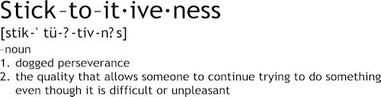
|
The capacity or drive to follow through to the completion of a goal and not to be put off by other demands or competing interests |
Persistence is needed when a task becomes boring, when it is interrupted, and when one needs to change strategies in order to reach the goal. Persistence involves sequencing, willfulness, and the ability to learn from experience, and is particularly important when task demands are long-term. It is very important in maintaining effort with tasks that are boring or uninteresting.
Because goal-directed persistence includes the ability to set a reachable goal and then display ongoing efforts and attention towards achieving this goal, it is clear that other executive functions come into play, particularly "planning and prioritization," "task initiation," and "sustained attention."
Goal-directed persistence is one of the last executive functions to mature. But even when children are young, these skills can be cultivated. Starting very small with the goal in sight (both in terms of time and space) is the first step. Give assistance to the child to reach the goal and offer affirmation when he reaches the goal. Gradually extend the time needed to reach the goal but keep reminders -make them visual!- in sight. Technology can be used to provide these reminders.
Because goal-directed persistence includes the ability to set a reachable goal and then display ongoing efforts and attention towards achieving this goal, it is clear that other executive functions come into play, particularly "planning and prioritization," "task initiation," and "sustained attention."
Goal-directed persistence is one of the last executive functions to mature. But even when children are young, these skills can be cultivated. Starting very small with the goal in sight (both in terms of time and space) is the first step. Give assistance to the child to reach the goal and offer affirmation when he reaches the goal. Gradually extend the time needed to reach the goal but keep reminders -make them visual!- in sight. Technology can be used to provide these reminders.

|
Activities in which goal-directed persistence come into play
|
Here are some ideas to consider as you support students with goal-directed persistence:

This will take you back to the list of executive functions.
|

You've walked through all the EFs except one! Click to head over to metacognition.
|
