Task initiationThe ability to begin tasks without undue procrastination, in an efficient and timely manner
|

|
Addressing difficulties in the area of task initiation
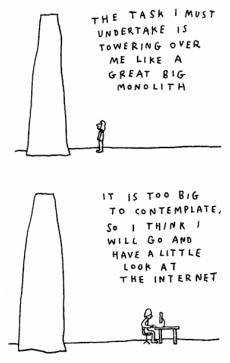
Task initiation, as we are using it here, does not apply to tasks that children want to do but only to those tasks that they find unpleasant, boring, aversive, or tedious. Tasks that are unpleasant, boring, aversive, or tedious are usually where we get to see many of the symptoms of ADHD show up, including difficulties with task initiation. Every task or activity requires that we, first, understand the requirements or expectations of the task, second, that we clarify for understanding, and third, that we have the ability to stop a previous activity and focus on the current activity. Students who struggle may have difficulty with how or where to begin. Cuing systems may be the first bridge used to help students initiate tasks.
Cuing systems
|
Having routines in place and then insuring that students adhere to those routines is an important step. Establishing deadlines for completion of tasks (and then adhering to these deadlines) is also key.
Cuing systems to trigger task initiation, particularly for tasks that aren't being done as part of the classroom group right now can be individualized. The cuing system should be strong enough so that they don't become nagging. For example, a gentle initiation cue ("Honey, don't you think you should get started?") might need to be more directive ("Here is a pencil; let's get started on number 1"). |
Initiation cues should be negotiated with the student so that they are as appealing as possible. Think about how you prefer to be "nudged into action" at home or at work. We all have preferences, including the students we support.
Here are some cuing systems to consider: |
|
Here are some ideas to consider as you address difficulties with task initiation.

Click here to go back to the Executive Functions page to choose which EF to explore next.
|

Click here to move forward to Planning/Prioritization....
|
